Sunday, March 26, 2017

April 1-2 Opti Spring Practices Start


Opti Race Team,


We will start spring practices next weekend, April 1-2! Katia will be coaching the team on Saturday and Sunday from 9am-4pm. Sailors should be rigged and ready by 9:30am. Wednesday practices will begin on April 5th 4-7pm.


We will have morning workouts on Saturday and Sunday, so pack accordingly. Workouts will start promptly at 9:30am. We will be doing be a fitness test in the beginning/half way/end of the season to have the kids set some goals and stay motivated/active. Exercises will include 1. Max pushups in 1 minute 2. Max Sit-ups in 1 minute 3. As a team we will increase our time for Wall sits.  


Please take all Optis off the trailer. After practice, Opti hulls can be stored on the rack on the floating dock in any of the open spots. Opti dollies should be stacked neatly together in the pad (no dollies should be left on floating dock or in the patio area).


Be sure to bring the following to practice:


-dry suits are mandatory. If you do not have a dry suit, do not plan on sailing.

-warm sailing gear: layers, long underwear, fleece, neck warmer, winter wool or fleece hat, rubber gloves or dish gloves to wear over your regular gloves.

-PACK A LUNCH

-refillable water bottle

-Sun protection: sunblock, hat with visor, sunglasses

-tennis shoes & workout clothes (only on Saturday and Sunday)

-toolbox

- Opti equipment you will need that was brought home over the winter


We are excited for the team to get back on the water this spring! I am away doing some personal sailing this week. I will be able to check email during the week, so please let me know if you have any questions.


Thank you,
Julia

Wednesday, March 15, 2017

2017 Sunshine State Championship Debrief

2017 Sunshine State Championship


On March 3-5th, 7 CYC team Optimist sailors traveled to Jensen Beach, Florida to participate in the 2017 Sunshine State Championship hosted by US Sailing Center Martin County. The regatta is the biggest tune up before Team Trials for the teams in the south-east, and the regatta was also a qualifier for Caribbean teams and attracted lots of international talent. Thus, there was fierce competition amongst 227 boats, and it was a great experience to be a part of! Jack Baldwin led CYC placing 30th overall.
Jack Baldwin

Peter Barnard


Despite the sunny name, the regatta occurred on the second day of a massive cold front coming through that part of Florida. A total of 6 races were sailed, 4 on Saturday and 2 on Sunday. The conditions were extremely windy on Sunday - in the upper teens to low twenty's. Saturday was slightly less but still pretty spotty!  Many sailors were intimidated by the conditions; I am happy to say that our sailors all went out every day and showed determination throughout the event. Attitude was an important factor in order to survive a long day in breeze and I felt that the sailors grew in their confidence sailing in breeze by the end of the regatta.

Annie Samis, hydrating in between races.


In windy conditions, swamping and capsizes can cost you in a race, and minimizing them is a skill. One of the things we taught the kids was that they have the ability to keep their boats upright if they maintain control by having good boat handling. This means hiking out and letting out your sail when you bear away, and playing the daggerboard through maneuvers. It means being able to sail while you bail on all three legs of the race course. The effect of water in your boat is to make it float lower, and to pitch more, which in turn ships even more water onboard! Bail as soon as there is an inch of water in your boat. Upwind, ease the mainsheet very slightly and put it in your tiller extension hand, then hike to heel the boat to windward, and reach your free front hand in for scoops with the bailer. Keep your eyes up on the waves and telltales and rely on the sound of the bailer scraping on the bottom of the boat.
Cali Frerker rigging her sail

Morning Rigging! Madeline Torrey, Katia DaSilva, Peter Barnard


Rigging and tuning are also really important to get right in heavy air:

  • Make sure your sail ties are tied correctly and knots are tight. Sail ties tend to stretch more in bigger breeze so making sure each sail tie knot is tighten goes a long way. Tight luff ties make for a flatter sail.

  • The top ties should be tightened so that there is no space between the sail and the mast. A good trick is to overlap the sail on the mast, then crank your horizontal tie.

  • The line on the sail should be in the center of the two lines on the mast. Higher or lower are both bad - messes with luff tension, sail too high or boom too low (dangerous).

  • Once you sail is fine-tuned and all corner ties are tight, you should present your major controls.

  • Make sure the outhaul is on, then proceed to the vang.

  • Before you put vang on, make sure you boom preventer line is on the hook (super important with new race sails).The preventer adjusts the tension on the luff of the sail, and needs different numbers of twists based on length and how you did your top corner ties, but in general we want FEWER TWISTS in heavy air and MORE TWISTS in light air. Ideally everything should be set up so you have 1 twist in heavy air and a pretty tight luff - the front edge of the sail 'snaps' if you pluck it.

  • Tension in the following order - VANG THEN SPRIT.

  • You want to put on some vang on land- bigger more experienced sailors can adjust on the water, but lighter newer ones need the help of the coach to tighten their vang on the water. Clip the mainsheet to the boom, trim in the sail to centerline, and take out all the slack on the vang. When you release the mainsheet, you will notice that you vang is significantly tighter. How far from the transom you trim the end of the boom is a good measure of how much vang. We go anywhere from 4 inches off in medium - heavy air to 1 in survival conditions.

  • Many of our sailors learned the benefits of switching from a 3 to 1 to a 4 to 1 mainsheet. Having the extra block makes it easier for sailors to trim in their sail.

  • Hiking hard the entire upwind, but hiking especially hard the first third of the upwind. This is because if your boat is not flat, then you are not making gains upwind, but rather side slipping.

  • On the run downwind you need to move you weight aft only when needed and move further forward in the lulls.

  • On the run downwind you never want to ease you sail past 90 degrees to the boat. This will cause the boat to flip or nose dive.

  • The reaches were in flatter water than most of the beats thanks to the close windward barrier island. Keeping the bow up was important as was hiking and aggressive body movements to get planning in the puffs. In general, you should try to heel to windward on the reach, and move forward in the lulls, back in the puffs as you would downwind. While having the high lane is almost always good in Optis, if you can work down in the puffs once speed is achieved, and up immediately in the lulls, you gain!

  • As always, but especially in bigger wind and fleets, having a good start was key. If you had a good start on the favored side and could hit the first shift you would extend your lead right away.

  • In general, there were more shifts on the top of the course because of the land windward to the course.
Peter Barnard, Julia Melton, Annie Samis, Katia DaSilva, Madeline Torrey, Deana Fedulova


Thank you to All-American Katia DaSilva for coaching the Chicago group with me, and to all the sailors and parents for making this happen!

Julia Melton


Friday, January 27, 2017

The Orange Bowl Regatta-Jack Baldwin


The Orange Bowl Regatta

Jack Baldwin USA17853

Chicago Yacht Club Opti-Red 


The CYC Optimist Race Team had the opportunity to go to Miami, Florida for the Orange Bowl Regatta this past December at the Coral Reef Yacht Club. This was my second year sailing in this event, and as in years past it was full of talented competition from across the USA, with many international sailors as well.  

The winds on day one were light, and hovered around 7 knots with a few puffs, while the current in Biscayne Bay was very strong. These conditions pushed many sailors over the line and a third of the entire fleet was black flagged in race two, myself included. I found at day’s end I had one of my worst regatta starts ever with two black flags and a mid-fleet finish on race three.

Day two started slow, with even less wind which resulted in an on-land morning postponement. By 10 am we were launched and able to get off three races. The wind was shifty and light, and the key to success was tacking on the lifts and staying one step ahead of everyone else. My results at the end of this light day were not what I wanted, but after a talk with my coach, Hector, I had a new perspective. I was not going to worry about my score and instead I was going to learn from this regatta, push the line, and sail with the best of the fleet. 

Day three brought more disappointment with a wind forecast of 1-2 knots all day. The Chicago Team spent time meeting with our coaches and in the Coral Reef pool trying to stay cool through the postponement. After lunch, racing was finally called off for the day, but a front was coming in and the forecast for day 4 had us excited to see some great wind.

The fleet was split into silver and gold fleets for the final day. Everyone was ready for more breeze, and with a steady 16-18 knots of wind, it was a perfect day for sailing. I stuck with my coach’s philosophy of pushing the line and using Orange Bowl as a learning regatta. I quit thinking about where I would place and I tried to sail in the front of the fleet. In winds like this I was really hiking out and doing my best keep my boat as flat as possible. My results on this day were much better, but more importantly I learned that sometimes I can let go of my scores and just learn. I can’t wait for Orange Bowl 2017!
Jack Baldwin

Coach Hector, Christian, Charlie, Dina, Madeline, Peter, Annie, Avery, Jack, Coach Julia

Friday, December 9, 2016

USODA MIDWINTER CHAMPIONSHIP


On November 24-26 I had the privilege to coach a great group of sailors at at the USODA Midwinter Championship, hosted by Southern YC. Peter Barnard, Annie Samis, Christian Pendergast represented Chicago YC and our team was joined by Charlie Allen from Pewaukee YC. 

Chicago YC was led by Peter Barnard who finished 73rd out of 265 boats and received an invite to represent  the U.S.A. at the 2017 Lake Garda Optimist Meeting in Riva del Garda, Italy. Way to go Peter!!

Peter Barnard sailing out to the race course

We had two practice days prior to the event with great medium air conditions. We focused on boat speed, sail trim and starts. 

The regatta started on Thanksgiving day, 5 races total were sailed over the 3 day event. The course was a USODA trapezoid.


On the first day no races were sailed and heavy fog kept the visibility low. We had to keep sailors close because you literally couldn't see more than 50 yards in any direction. This day was a good test for us to recognize areas we needed improvement specifically patience with wind delays and improving on rigging.The kids needed to exercise more careful attention to tying their sail ties. Being a USODA regatta the top 10 finishers had to have their sail ties checked as well as safety equipment after each race to make sure they were legal. If one of your sail ties fall off or stretches too much you get a penalty. 

Fog day 1 

The second day the sailors arrived eager and ready to sail. With dying breeze throughout the day, the race committee was only able to get one race off. This one race however was a very good race for Annie and Charlie, who both managed to get clear air by sailing to the right edge of the course.  unfortunately lack of breeze led to multiple abandonments, leaving the fleet frustrated after only one race.

Towing the team in after first race on day 2

The final day of the regatta we managed to get 4 races off, which meant one throw out. The conditions on the last day started choppy, and breezy with north winds at 10 knots. As the day went on, the breeze swung left and died down to 4-7 knots.

Some take aways from this regatta:

Clear air was (and usually is) critical when sailing in light air. Additionally we found in light air that sailing to an edge also paid off. You had to pick a side, get off the line in clear air, and sail the shifts while working towards the edge that had the most pressure. It was important to constantly be looking for pressure on course and watching your angles to mark.

Starts
It was important at the start to find a nice hole on the line for which you can maintain clear air. Usually you could find a nice gap 2/3 away from the favored end of the line. 

Starting at the unfavored end also worked at this regatta for the first race on day two. 4 boats started at the unfavored end and the majority of the fleet (70+ boats) started at the crowded end of the line at the boat. The boat end was favored by 5 degrees, but it didn't pay off to start there because there was less clear air. Ultimately, the 4 boats that started at pin were able to tack and cross the fleet. 

The more boats you start around=the less wind that is there.

Also, the lighter the wind, the more important it is to have clear air. Have you ever noticed when you are on a starting line it feels like there is lighter wind than any other place on the course? This is because of the aerodynamics of the fleets collective wind shadow. At this regatta, if you were not one of the top 10 boats off the line, then you were stuck in the wind shadow of the fleet. Before the start its important to asses how favored an end is versus how crowded it’s going to be.

Downwind
The goal on the reaches and runs was to keep clear air and maximize speed. Sailing high on the reaches was key to keeping your air clear.  

When kiting on the runs you want to sit as far forwards as you can for the given conditions. When doing this you reduce the amount of drag from the transom as well as the rudder. When you sit too far back in the boat, the transom digs in the water more than the bow because the transom has a wider profile and more surface area. Sailors need to position their knees forward and shins should be pressed up against the thwart. The boom should be out exactly at 90 degrees. Sailors also need to raise their daggerboards high enough (when boards are too low, boats are actually more prone to bow plow) and to let off sprit to release the crease and open the leach to create up flow on the sail. 

Preparation
One thing I find important to teach sailors is the importance of fueling our bodies with the right ingredients for success. Hydration is critical for keeping the brain sharp. Our sailors were assigned homework to drink 4 large glasses of water at night after each day of racing and they continued to hydrate in the morning and on the water. As a result, our team had more energy throughout the day and were able to think clearly. Our team also worked on mental prep, by starting each day with a visualization exercise. Other ingredients for success include boat prep, eating healthy food, and having a good understanding of venue the by arriving early to practice, research, and looking at the forecast every morning.

Congratulations to all of our sailors for working hard at this regatta and thanks to all of the parents who made it possible!

Julia Melton


Results

Photo credit-Tom Barnard

Thursday, November 10, 2016

Columbia YC Regatta -- 11/05-11/06

Hi all,

The opti race team competed at Columbia YC this past weekend -- the last regatta of the season for most. 

Some of the sailors were disappointed with their final results; however, I want to remind you that progress is not perfection. I saw an improvement with each and every sailor, whether that was on the starting line, leeward mark roundings, fleet management, or boat speed! It's so easy to get caught up with numbers and results, but it's important to establish mini goals. This will help establish a sense of accomplishment (which is typically harder to see/feel within yourself). 

This was a tricky venue, but fun! On both days, the puffs were clearly visible on the water, and we were working on thinking two steps ahead. 

Starts: 
  1.  The line was SO short -- which means we have to be earlier and more aggressive! 
  2. Being a Shark vs. Minnow -- Minnows set up on the line earlier, and have a “home”— They protect their spot/hole from the sharks. Sharks come in later and try to steal the minnow’s hole. Think about times in which you may want to be a shark vs. minnow. Maybe the fleet is more aggressive. Maybe the fleet is setting up too late and you have to be a minnow.
  3. With persistent right shifts, we needed to be able to stay on starboard after go. Meaning, we had to really focus on being in that first row, and maintaining our point, proper sail trim, and boat speed up for that first 30 seconds-1minute
  4. With persistent left shifts, we needed to plan ahead for the ability to tack right off of the line. On Sunday, sailors could not even make the pin from the boat, meaning HUGE lefty and not a square line. Instead of having a hole to leeward, we want to create our hole to windward! We got better with this as the day went on. I found that sailors were tacking onto port too late, and would wait for ‘go.’ Jump the gun, and get up to the line on port, since you know people won’t be able to call starboard on you! They won’t be able to reach you. Be smart about this though. 

Upwind: 
  1. The race course was also extremely short — 1st race lasted 6 minutes long.... This means that we have to begin thinking about our approach to the windward mark sooner. 
  2. Questions to ask yourself: 
    1. Is it too risky to come in on the port lay line?
    2. How can I position myself on starboard lay line to pick up one or two boats?
    3. Which side of the top of the course has more pressure? What can I use to bring me across the middle (is there a big puff I can connect to? or am I in the biggest shift right now?
  3. On Sunday with the persistent left shift, you have to ask yourself how you can get over to the mark which is now over to your left (since you all paraded out on port from the starting line). Think about taking any little shift over to the other side or pressure! Find the pressure! 

Also, START THINKING AHEAD FOR THE DONWIND. 
  • You should know if you are going to hold on starboard after the windward mark, or if you will have to gybe onto port right around the mark. 
  • Because the course was so skewed, we needed to recognize that early gybe around the mark was KEY!!! I saw people holding on starboard for too long, then having to reach up to the mark, giving boats inside overlap, and causing our sailors to round on the outside of the pin wheel. Not good… 
  • On such a short course, you have to fight for the inside at the leeward mark. That means, protecting the boats behind you, but also recognizing that you can pick up a few boats ahead of you by “jumping" them to the zone. Work hard to get inside overlap (all you need is a bit of overlap with their rudder and you are golden). 

Second upwind:
  • Be careful tacking early around the mark if there is still a fleet of boats coming downwind. Remember that light breeze goes around the fleet (towards the edges of the race course).
  • Be patient! Many sailors got anxious on the second upwind and starting tacking too much! I saw this quite frequently between the boats in 1st and 2nd. You have to trust that you are smart. You have to try to outsmart the other boat. If they tack before the puff, and they are not getting the max pressure of the puff, just extend into the puff to reach that max pressure. 
  • When I’m in this position (battling it out with another boat regardless of which place you are in), I think — is there something that the other boat is not doing that I can do better? Are their tacks slow/bad where I can engage him in a tacking duel and beat him off of boat handling? Is he extending out to the wrong side of the race course? Is he tacking shy of the puffs and not digging into them? Or, do I have to forget about this boat and just protect my position within the rest of the fleet? 

Last downwind: 
  • With the finish line to the right of the race committee boat, that early gybe is key. Let’s recognize this before the race even starts! 
  • We still need to work on consistent windward heel on the downwinds… perhaps we just need to eat more burgers :) 


Thank you for such a great season, and for inviting me to join you all this fall. Looking forward to working with you at Midwinters! Please let me know if you have any further questions. 

-Katia DaSilva

CYC Opti Team Gets Top Results at Consecutive Regattas!

Halloween Spectacular Regatta at Lake Forest


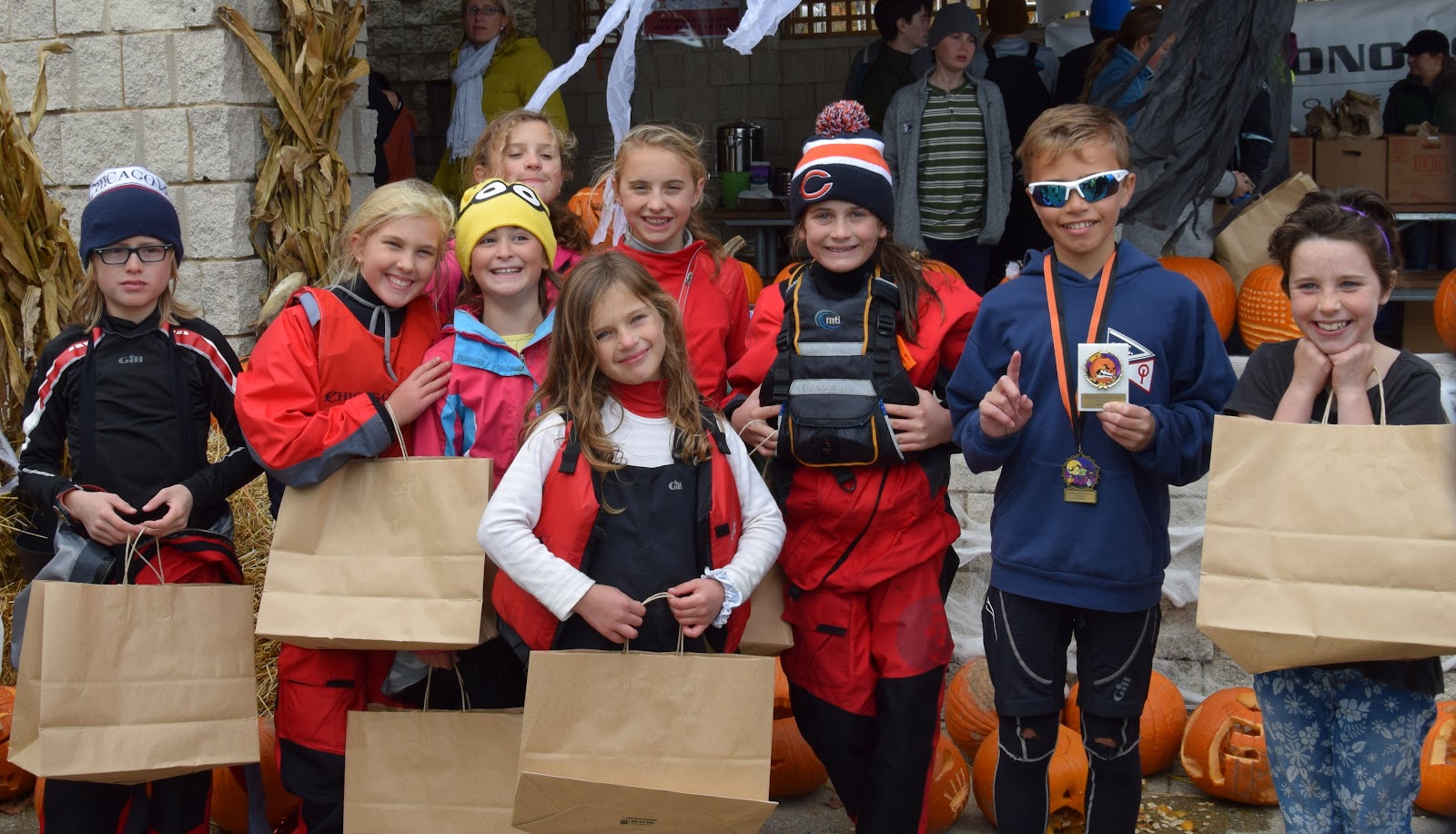
October 29-30th was the Halloween Spectacular regatta hosted by Lake Forest. CYC had the largest Opti participation with 7 of our newest Lime sailors sailing in Green fleet and 8 of our Championship sailors competing in Red White and Blue Fleet.

Amy Kehoe coached the Green team and it was many of the sailors first regatta. The kids had a blast (all left with smiles) and did a great job!

Katia DaSilva and Julia Melton coached the Championship fleet. Peter Barnard was the 1st overall, Christian Prendergast was 5th overall, and Dina Fedulova placed 3rd in white fleet. All of our sailors improved throughout the weekend. Way to go sailors!

Lake Forest post (23).jpg


Shepherd's Regatta at Columbia Yacht Club


On November 5-6 the Opti team traveled to Monroe Harbor for the Shepherds regatta hosted by Columbia YC.

The conditions on Saturday were light, shifty and variable winds from the west. Sunday conditions were light and shifty, but slightly more consistent breeze coming from the east.

The Race Committee raced both fleets on the same course, which made it challenging to stay in clear air and avoid other boats around the course. The kids did an outstanding job-check out the results below!

Championship Fleet (R,W,B)
1st Peter Barnard
2nd Christian Predergast
4 Annie Samis
5th Parker Rasmussen
8th Deana Fedulova
9th Jack Baldwin
10th Emilia Rose
11th Avery Baldwin
12 Cali Frerker
Green Fleet
4th Charlie Dishchner
5th Spencer von Peterffy
6th Cate Baldwin
9th Grace Renz


Wednesday, November 2, 2016

Halloween Regatta Debrief -- RWB


Hi! Here are my thoughts on this past weekend's regatta. Everyone sailed exceptionally well -- even though many were upset with their end results... It seemed like a perfect weekend to practice our 'focus words,' too! 

STARTS:
  • We seemed to be getting mixed into the pack. To avoid this, we need to work on finding a rhythm during the set up/prestart. I personally like starting with a port approach so that I can see how the fleet is setting up. 
    • Questions to ask yourself during your approach:
      • Are people setting up early? late? on time? 
      • Quickly remind yourself -- What is the current doing? Are there waves pushing people down opening up the boat ? Will I have to accelerate earlier (in light air) or can i accelerate a bit later  (in heavy air)? But, how about waves?
      • Do I want to hold on starboard after the start (as was the case on Saturday with the lighter air and the persistent right shift) or do I have to be able to tack out onto port (as was the case on Sunday afternoon with the persistent lefty)? 
  • Starting line priorities: 1. Be front row 2. Be full speed at go 3. Be on the proper side
    • For now, we are practicing 1 and 2
  • Key points about starts: 
    • Don't be in the pack
    • When the boats around you start accelerating, you should be too -- listen for the ratchet clicks!!!
    • The most important time (I believe) of a race is right after the gun at go -- focus on your sail trim/tell tales/ boat speed to punch out. This will make your life much SO much easier


FIRST UPWIND:
  • Too many people were sitting in dirty air off of the starting line (TIME IS MONEY!)
  • In lighter air, extend to a side. In heavy air, you can make the middle work better
  • Again, focus on boat speed for that first 30 seconds - 1 minute after go. Make it perfect...
  • There are different types of puffs (we can talk about this later). Questions to ask -- can I tack on the edge of the puff to get the shift or do I have to sail in it/dig, to get more of the shift?
  • We need to start thinking about your approach to the windward mark earlier. Anticipate the 'opti train' on the starboard lay line. Think: How can I catch one or two boats on the top 1/5 of the upwind. Can I get one of them by calling starboard on them (i.e. through a starboard/port)? 

DOWNWINDS:
  • Keep trying to maintain constant windward heel
    • heel = higher sail = more pressure (and less surface area in the water)
  • Before rounding the windward mark, you should know which side of the course has more pressure. That way you know whether you should hold on starboard or to gybe onto port — don’t just follow the leaders. Go towards darker water
  • Make sure you keep looking over your shoulder to see where the breeze is coming behind you! You were all tunnel vision forward, but the breeze is coming from behind you! 
  • Let's talk about S curves in breeze and how to get on a wave/surf/stay on the wave. Great attempts for pumping and surfing on Sunday though! That was really fun to see. 


SECOND UPWIND:
  • This upwind is more about risk/fleet management. If you are in the back, and need to gain many boats take a bigger risk. How? Leverage. Going further out to the side will give you leverage. More leverage, more risk, so you can gain/lose more boats. 
    • e.g. if you bang the right corner and have good boat speed, you will either win by a mile or lose by a mile. 
  • If you want to protect your position (say you are in the top 5), K.I.S.S. — keep it SO simple. Just protect from the 'middle'. Don’t take risks banging corners. If people are gaining/catching up to you on a certain side, protect more on that side. Don't give them leverage. You become like a basketball defender -- stay in between your opponent and the 'basket' or in this case, the mark. 
  • You all can find a nice balance between taking risks and keeping it conservative. Just make sure you know what your goals are first. 
    • These goals also change throughout the course of the regatta (as they do during a race) -- do we play it more conservative Saturday morning and take bigger risks on Sunday afternoon or can we just go for it from the beginning and play it conservatively if we are ahead? This is something you can talk to us about. 


Lastly, ALWAYS say thank you to the race committee after every race. You never know when they will give you a little favor later on…


Side notes: bring more gear, food and water! Prepare for all weather while packing your bag. I always bring extra fleeces, pants, etc. just in case. No excuse to be cold, tired, or hungry :)